|
|
|
|
Welcome to the Department of Emergency Medicine and the medical student rotation at the University of Maryland! The rotation has rapidly become one of the most popular in the School of Medicine, with an increasing number of students choosing it every year, and is now a core clerkship for our 3rd year students. We also offer a Sub-Internship for interested fourth-year medical students at LCME accredited allopathic and osteopathic medical schools. The faculty at the University of Maryland are dedicated to providing an excellent educational experience for medical students. Under the direct supervision of emergency medicine faculty and senior residents, students will be exposed to a broad variety of acute illnesses and will develop the necessary skills to be able to provide care for the acutely ill or injured patient. Our focus is to teach medical students how to evaluate the undifferentiated patient, generate an emergency-medicine-specific differential diagnosis, and come up with a treatment plan.
Clerkship
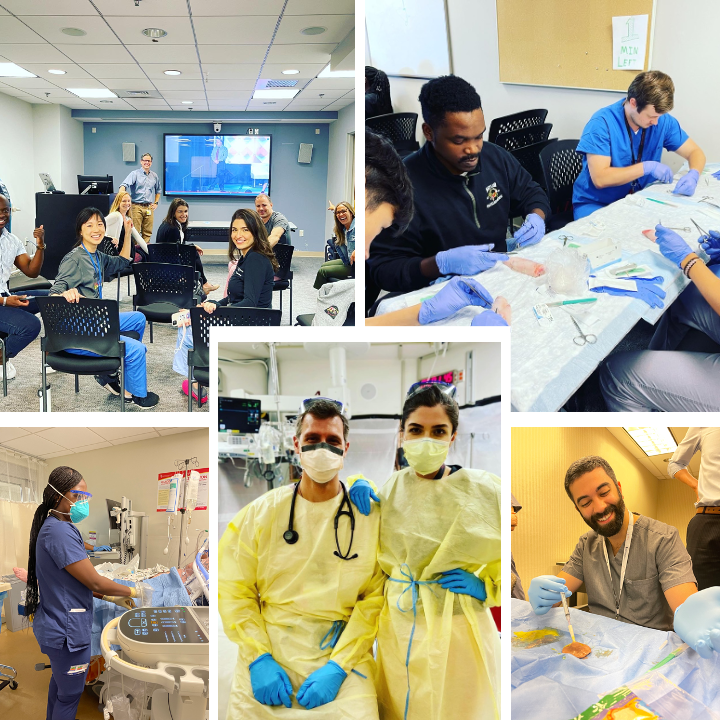
Clerkship students will spend 4 weeks in the Emergency Department working clinical shifts with our Emergency Medicine Faculty. During this time they will be supervised by Emergency Medicine faculty and residents taking care of patients in the Emergency Department. They will have 12-14 clinical shifts over that 4-week period which will include morning, evening, overnight, and weekend shifts. Students will receive a lecture series in the first week of the rotation and will have several lab experiences, including a procedure lab, simulation lab, suture lab, splint lab, and ultrasound lab. In addition to traditional didactic lectures and labs, students are also exposed to newer educational technologies, such as online lectures and interactive educational blogs.
During the Emergency Medicine rotation, the goals and objectives are as follows
Laboratory sessions are one of the most popular aspects of the rotation. Students learn how to perform the following procedures:
The following labs are provided during the rotation:
Outside resources include use of Medmastery
Medmastery is an outstanding clinical resource that serves as a fast and efficient guide to hundreds of clinically relevant skills through the use of short clips, videos, workshops, and modules. Topics include how to read ECGs, a chest X-ray, a CT head or pulmonary function tests, and much more. With MedMastery you can deepen your knowledge about various medical conditions and diseases that every GP meets on a daily basis.
Medmastery provides our institution with a special offer that allows students to use their courses, workshops, and webinars free of charge. Thank you Medmastery!
Sub-Internship
Dr. Kat Stephanos, MD
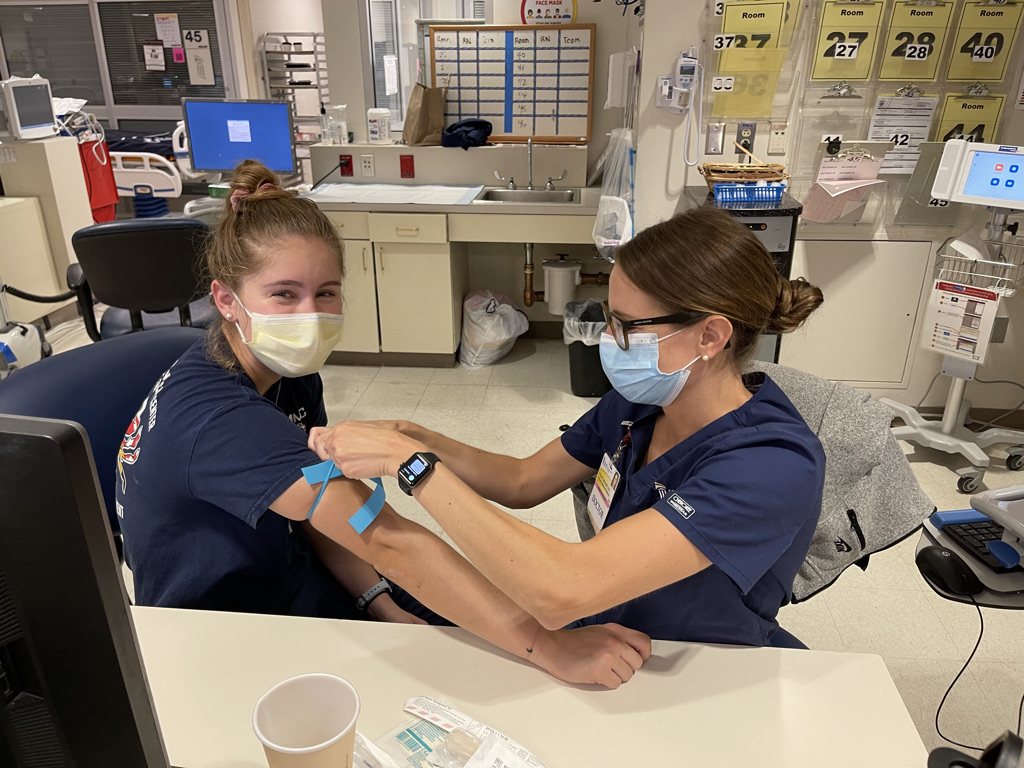
Students on the fourth-year emergency medicine Sub-I are involved in a variety of educational experiences. During the rotation, students work approximately 13-14 clinical shifts, generally a mixture of day, evening, and overnight. Clinical shifts are done in the University of Maryland emergency department with occasional shifts in the Pediatric emergency department. Students work one-on-one with senior residents and faculty and see a variety of patient complaints and presentations. For those students intereseted in our combined programs (EM/IM and EM/Peds), experience will be taylored to the best of the schedules ability to provide insight and advising into these special programs.
The expectation on the Sub-I is that the student works as at the level of the intern, carrying their own patients, learning procedures, and managing patient care from start to finish.
A lecture series is held the weekly and consists of Sub-I level lectures given by emergency medicine faculty. These sessions are a mixture of PowerPoint presentations and small-group discussions. A monthly Sub-I journal club will be held the 3rd week of the rotation. Sub-I students are also required to complete a high quality 15 minute presentation on a specific emergency medicine topic during the last week of Sub-I lecture. In addition, students attend 5 hours of educational conferences for the emergency medicine residents weekly.
There is no exam for Sub-I students, and will be graded 100% on clinical evaluations. Duration of rotation: 4 weeks
Students are given a formal orientation to the emergency department, which includes the following:
Emergency Medicine faculty are very involved in undergraduate medical education at the University of Maryland School of Medicine. During years 1 and 2, faculty give lectures and lead small groups as part of the Pathophysiology and Therapeutics course. In addition, Drs. Samantha King, Sarah Sommerkamp, Neeraja Murali, Afrah Ali, Leen Alblaihed and others have integrated other emergency medicine material into the curriculum, such as airway management and cardiopulmonary simulation case scenarios. Multiple faculty members are also involved in the Practice of Medicine course given for first and second-year medical students. Dr. Alblaihed is the course director for the Cardiology section of the 2nd year student curriculum. Spangler is the course director for the Multisystem course, a new and innovative experience to complete the preclinical curriculum for 2nd year students. Many of the faculty also participate in the mentoring program and regularly have students in the emergency department for shadowing.
|
Students rotating through the Emergency Department should consider reading this article. |
The Emergency Medicine Interest Group at the University of Maryland is a student-run organization that organizes activities that expose students to various aspects of the practice of emergency medicine. These activities range from blood draw labs to emergency medicine residency planning. Events are planned and run with the assistance of many of the emergency medicine faculty members. They are eager to provide first- and second-year medical students with opportunities to learn more about emergency medicine. Interested students may attend any or all of the events.
The EMIG mentoring program matches first- and second-year medical students with emergency medicine residents and faculty. Students then have the opportunity to shadow the residents and faculty while they work in the emergency department. Students accompany the physician as they interview patients, completes procedures, performs resuscitations, and arranges consultations. The student's role is primarily that of observer. However, depending on the preceptor, the student may be allowed to practice the history-taking and physical diagnosis skills learned in the Introduction to Clinical Medicine and Physical Diagnosis courses. The mentoring program is a wonderful resource for students considering a career in emergency medicine.
Any medical student that is interested in emergency medicine can be assigned to a faculty mentor to help them gain exposure to Emergency Medicine and help in navigating the residency application process.
Students often participate with the Emergency Department as part of FRCT projects.
From time to time, students can help with research projects and gain hands-on research experience. Students who would like to be involved should send their name, graduation year, and email address to Dr. Gentry Wilkerson.
We sincerely hope you will consider doing a rotation with us in emergency medicine.
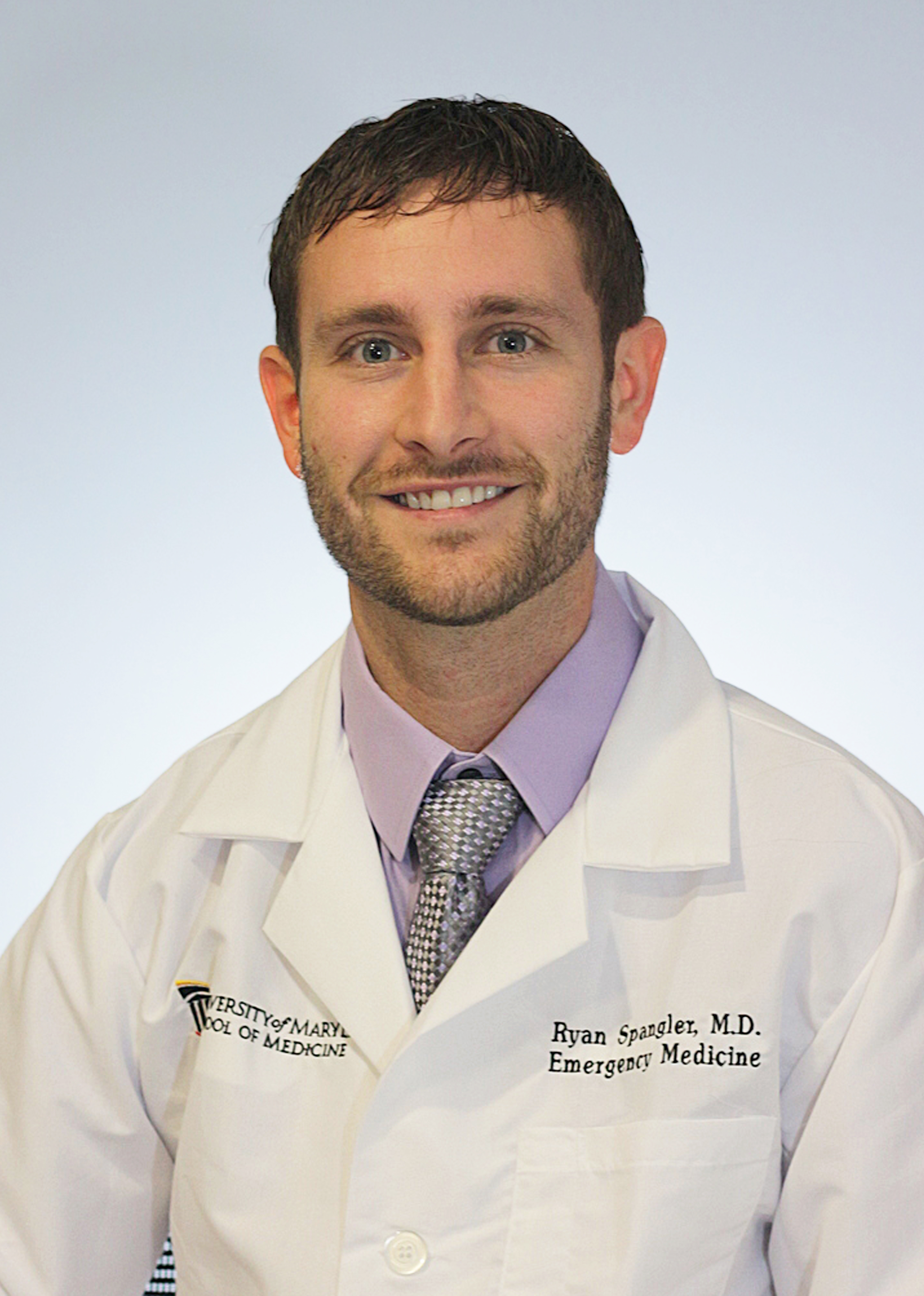
Ryan Spangler, MD
 STUDENT ROTATION Students interested in completing an elective in Emergency Medicine can download our Curriculum Guide Here. All visiting students wanting to rotate in emergency medicine must apply through VSLO. Contact the Office of Student Affairs, with any VSLO related questions. Contact our Medical Student Coordinator Shanell McCall-Cephas for rotation specific questions.
Block Dates
2024-2025
1. July 7 - August 1st, 2025
PROCEDURE VIDEOS
• Anatomy Landmarks • Central Line Kit • Internal Jugular I • Internal Jugular II • Subclavian (supra) • Subclavian (infra) I • Subclavian (infra) II • Retro Intubation I • Retro Intubation II • Cricothyrotomy I • Cricothyrotomy II • Tube Thoracostomy • Thoracotomy
Emergency Medicine Primer
EMERGENCY MEDICINE CLERKSHIP PRIMER: Manual for Medical Students presented by the Academy of Clerkship Directors in Emergency Medicine. Please visit their website by clicking here.
EMIG
The University of Maryland Emergency Medicine Interest Group is a student organization which facilitates interaction and exposure between faculty, residents, and medical students. Several activities are planned throughout the year including: • Lectures • Procedure Labs • Clinical Observation • Cadaver Labs Please check out their website for more information, or contact Stephen Lee, MD. |