Category: Administration
Keywords: discharge barriers (PubMed Search)
Posted: 7/26/2026 by Robert Flint, MD
Click here to contact Robert Flint, MD
This single center study asked patients about barriers to health carrier after ED discharge (example transportation, lack of PCP, inability afford medications, trouble with ADLs) and then surveyed EM residents about those same patients' barriers. Resident physicians way under perceived barriers to care in their patients. ("20.4% of patients reported they had no primary care physician (PCP) and 9.8% of residents reported their patient had no PCP . Limited health literacy was identified in 59.0% of patients and reported by 37.6% of residents . Abnormal cognition was present in 53.6% of adults age ??65 and reported by 16.7% of residents .")
Another example of if you do not ask, you will not know. Be careful of assumptions.
T. K. Hagerman, F. I. Mowbray, T. Lang, et al., “ Overlooking Barriers to Safe and Effective Emergency Department Discharge,” Academic Emergency Medicine 33, no. 5 (2026): e70320, https://doi.org/10.1111/acem.70320.
Category: Geriatrics
Keywords: Suicidal ideation, older, geriatric (PubMed Search)
Posted: 7/23/2026 by Robert Flint, MD
(Updated: 7/28/2026)
Click here to contact Robert Flint, MD
This Canadian study looking at older patients presenting to EDs with suicidal ideation or attempt found most were female, arrived by ambulance from home, had poor social determinates of health, had a mental health history and attempts were by poisoning. Similar risk factors to other age groups. Mental health conditions donot tend to improve with age.
V. Boucher, A.-P. Gagnon, P.-A. Tardif, et al., “ Suicidal Ideation and Attempts in Older Adults: Findings From Five Canadian Emergency Departments,” Journal of the American Geriatrics Society (2026): 1–10, https://doi.org/10.1111/jgs.70464.
Category: Geriatrics
Keywords: GEMRX Prescribing older (PubMed Search)
Posted: 7/12/2026 by Robert Flint, MD
(Updated: 7/28/2026)
Click here to contact Robert Flint, MD
A good reminder to consider careful prescribing to older patients at the time of ED discharge.
From this study: “Nearly 1 in 10 older adults filled a high-risk GEMS-Rx medication within 3?days of ED discharge between 2017 and 2022. Despite a decline in GEMS-Rx medication fills over time, younger cohorts of older adults and females were more likely to fill a high-risk medication upon ED discharge.”
Click for Gems-RX list
Medications on GEMS Rx list
S. E. Follman, M. Canavan, C. Rothenberg, et al., “ High-Risk Medication Prescribing Among Older Adults in the Emergency Department: A National Assessment,” Academic Emergency Medicine 33, no. 5 (2026): e70321, https://doi.org/10.1111/acem.70321.
Category: Trauma
Posted: 7/9/2026 by Robert Flint, MD
(Updated: 7/28/2026)
Click here to contact Robert Flint, MD
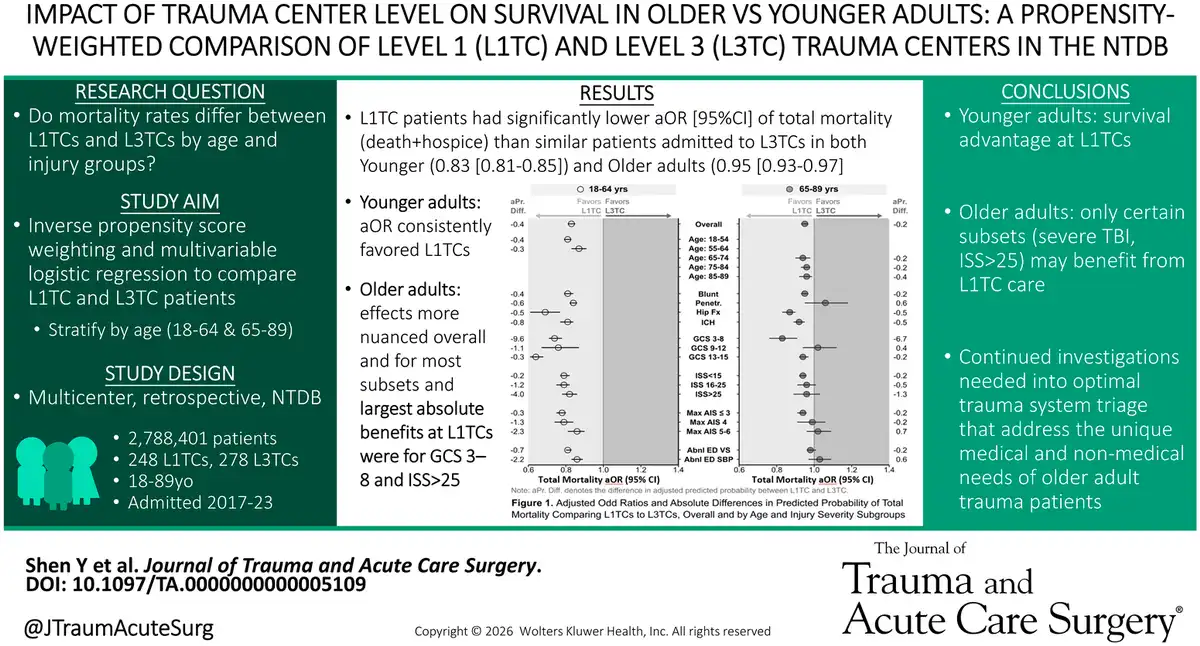
Intuitively, both younger and older patients would have better outcomes at level 1 vs level 3 centers. This was true in younger patients in this large trauma database study. It was only true for older patients with traumatic brain injury and a high injury severity score. Is this a function of care delivery being better at level 3 or less geriatric focus at level 1 trauma centers?
Authors and Affiliations
Journal of Trauma and Acute Care Surgery Publish Ahead of Print, July 9, 2026. | DOI: 10.1097/TA.0000000000005109
Category: Geriatrics
Posted: 7/5/2026 by Robert Flint, MD
(Updated: 7/28/2026)
Click here to contact Robert Flint, MD
This study looking at older patient contact with the health system within 30 days of ED discharge found an overall lower rate of follow up for those patients with dementia. Perhaps extra care at time of discharge in arranging follow up is warranted for older dementia patients.
Cameron J. Gettel, Craig Rothenberg, Courtney Kitchen, Yuxiao Song, Susan N. Hastings, Ula Hwang, Michelle A. Fischer, Christina L. Shenvi, Arjun K. Venkatesh
First published: 13 June 2026
Category: Trauma
Posted: 7/4/2026 by Robert Flint, MD
(Updated: 7/28/2026)
Click here to contact Robert Flint, MD
This Canadian study found women, even when controlling for injury severity, socioeconomic conditions etc, were less likely to be admitted to a trauma center than their male counterparts. Further investigation into this bias is warranted.
Natalia Alejandra Angeloni Areti-Angeliki Veroniki
Federico Angriman Damon C. Scales and Neill K. J. Adhikari
CMAJ June 15, 2026 198 23)E885-E893DOI:https://doi.org/10.1503/cmaj.251721
Category: EMS
Keywords: Heat stroke, prehospital, cold water immersion (PubMed Search)
Posted: 6/28/2026 by Robert Flint, MD
(Updated: 7/28/2026)
Click here to contact Robert Flint, MD
These authors looked at outcomes related to patients who underwent prehospital cold water immersion for acute heat stroke in Phoenix. They found immersion dropped temperature and improved neurologic function. This is a great reminder to cool these patients as soon as possible and a prehospital cooling protocol is feasible and helpful.
Comp G, Finch C, Kupanoff K, Sandoval M, Lloyd M, Aldaco N, Kirk D, Pugsley P, Nordstrom L, Koenig BW, Narang A, Snow J, Kamer M, Foster A, Patel G, Stowell JR. Fighting Fire with Ice: A Multisite Collaboration to Evaluate the Impact of Prehospital Cold Water Immersion on Heat Stroke Patients. Prehosp Emerg Care. 2026 Mar 13:1-11. doi: 10.1080/10903127.2026.2636148. Epub ahead of print. PMID: 41739962.
Category: Trauma
Keywords: Cervical done clearance (PubMed Search)
Posted: 6/25/2026 by Robert Flint, MD
(Updated: 7/28/2026)
Click here to contact Robert Flint, MD
This review article in the Journal of Trauma and Acute Care Surgery states:
“In obtunded patients, an adequate and normal high-quality CT supports collar removal without the need for adjunctive imaging.”
The Journal of Trauma and Acute Care Surgery ():10.1097/TA.0000000000005025, June 1, 2026. | DOI: 10.1097/TA.0000000000005025
Category: Trauma
Keywords: Intubation DL VL (PubMed Search)
Posted: 6/21/2026 by Robert Flint, MD
(Updated: 7/28/2026)
Click here to contact Robert Flint, MD
In a randomized multicenter trial comparing direct vs video laryngoscopy in trauma patient intubation, video had a higher first pass success rate and equal complication to direct laryngoscopy.
The Journal of Trauma and Acute Care Surgery ():10.1097/TA.0000000000005021, May 7, 2026. | DOI: 10.1097/TA.0000000000005021
Category: Administration
Keywords: Discharge barrier (PubMed Search)
Posted: 6/18/2026 by Robert Flint, MD
(Updated: 7/28/2026)
Click here to contact Robert Flint, MD
This single center prospective study asked residents to determine if their patient had barriers to post ED discharge health care such as having a PCP, transportation issues, affording medications, and need for assistance with activities of daily living. They then compared the physicians’ answers to patient’s answers and found: “Physicians had poor sensitivity for accurate identification of patient barriers.”
Some of our discharged patients are struggling more than we realize.
cademic Emergency MedicineVolume 33, Issue 5 e70320
Overlooking Barriers to Safe and Effective Emergency Department Discharge
Thomas K. Hagerman, Fabrice I. Mowbray, Tiara Lang, Maryam Nour, Jo-Ann K. Rammal, Samantha Odeesho, Seraj Farhat, Howard Klausner, Mansoor Siddiqui, Joseph Miller
First published: 06 May 2026
Category: Trauma
Keywords: Hemothorax observation (PubMed Search)
Posted: 6/14/2026 by Robert Flint, MD
(Updated: 7/28/2026)
Click here to contact Robert Flint, MD
This multicenter study looked at trauma patients with a hemothorax who underwent early tube thoracostomy vs. being observed. They found volume of over 300 ml predicted observation failure. Those observed had shorter hospital stays and less ICU admissions. Twenty two percent of observation patients required tube thoracostomy. The failed observation group had similar outcomes except longer hospital stays.
The Journal of Trauma and Acute Care Surgery ():10.1097/TA.0000000000004991, April 24, 2026. | DOI: 10.1097/TA.0000000000004991
Category: Geriatrics
Keywords: Geriatric, prescriptions (PubMed Search)
Posted: 6/7/2026 by Robert Flint, MD
(Updated: 7/28/2026)
Click here to contact Robert Flint, MD
Expert consensus recommends not prescribing these eight classes of medications to older adults mostly due to sedative affect and fall risk. 1. Benzodiazepines 2. Barbiturates 3. Muscle relaxants 4. 1st generation antihistamines 5. Sulfanylureas 6. 1st generation antipsychotics 7. Zolpidem 8. Metocloprimide
A recent study shows marginal improvement in not prescribing these medications to older ED patients.
Skains RM, Koehl JL, Aldeen A, Carpenter CR, Gettel CJ, Goldberg EM, Hwang U, Kocher KE, Southerland LT, Goyal P, Berdahl CT, Venkatesh AK, Lin MP. Geriatric Emergency Medication Safety Recommendations (GEMS-Rx): Modified Delphi Development of a High-Risk Prescription List for Older Emergency Department Patients. Ann Emerg Med. 2024 Sep;84(3):274-284. doi: 10.1016/j.annemergmed.2024.01.033. Epub 2024 Mar 12. PMID: 38483427; PMCID: PMC11343681.
Academic Emergency MedicineVolume 33, Issue 5 e7032
Category: Endocrine
Keywords: DKA (PubMed Search)
Posted: 6/6/2026 by Robert Flint, MD
(Updated: 7/28/2026)
Click here to contact Robert Flint, MD
This single center study looked at diabetic patients who had a POC glucose over 300 and POC ketone over 1.1 and reviewed their diagnosis vs the laboratory accepted diagnosis of DKA.
“The most recent international consensus laboratory definition of (non-euglycemic) DKA includes a glucose of >?250; a pH <?7.3 or a bicarbonate ??18?mmol/L; and a beta-hydroxybutyrate (BOHB) ??3.0?mmol/L or urine ketone strip ??2+”
They found that 53% met the laboratory definition of DKA.
Of the remainder:
“Of 740 screening positive by POC testing whose initial labs did not meet DKA criteria, 229 (31%, 95% CI: 28, 34) were diagnosed with DKA. Primary ED diagnoses of the remaining 511 included: hyperglycemia (196, 38%), starvation ketosis (58, 11%), hyperosmotic hyperglycemic state (11, 2%), and other ketosis (9, 2%), while 67 (13%) had a primary diagnosis of infection, 1 (<?1%) metabolic acidosis and 169 (33%) an unrelated diagnosis.”
Their conclusion was EPs diagnose DKA even when lab work doesn’t support the diagnosis as it is a clinical not a lab diagnosis. Most importantly these patients are getting insulin and fluid to correct their underlying metabolic derangement.
R. T.Griffey, N.Haas, R. M.Schneider, et al., “How Often Are Emergency Patients Diagnosed With Diabetic Ketoacidosis Despite Not Meeting Laboratory Criteria?,” Academic Emergency Medicine33, no. 5 (2026): e70315, https://doi.org/10.1111/acem.70315.
Category: Trauma
Keywords: spinal injury, concurrent injury (PubMed Search)
Posted: 6/4/2026 by Robert Flint, MD
Click here to contact Robert Flint, MD
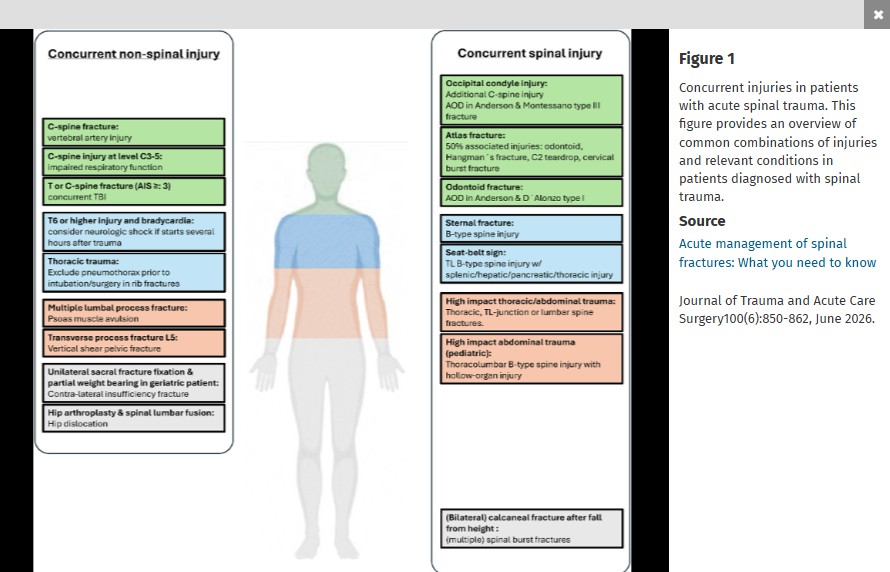
This nice review article reminds us “The AO-Spine classification is the most frequently utilized system for thoracic and lumbar fractures, and it categorizes fractures into three types. Type A fractures are compression injuries. In these fractures, the assessment of the involvement of the posterior elements of the vertebral body is essential. Type B fractures are distraction injuries implying tension band involvement, whereas type C fractures are translational or dislocated injuries. The AO-Spine Upper Cervical Injury Classification System… In this classification system, type A injuries have no ligamentous involvement and are considered stable. Type B injuries have tension band or ligamentous injury and may be unstable. Type C injuries are characterized by significant translation and loss of anatomic integrity and are considered unstable."
Category: Trauma
Keywords: Diamond minutes, bystander (PubMed Search)
Posted: 5/31/2026 by Robert Flint, MD
(Updated: 7/28/2026)
Click here to contact Robert Flint, MD
These authors argue that bystander interventions in the early minutes (they call them the diamond minutes) can have an impact on trauma survival. Particular attention to External hemorrhage control; Airway opening and maintenance; Safe positioning of unconscious patients; Mitigation of early hypoxia and hypothermia could improve survival. We need to publicize this information and undo the years of teaching not to move these patients due to concern of secondary spinal cord injury. Many studies have dispelled that concern.
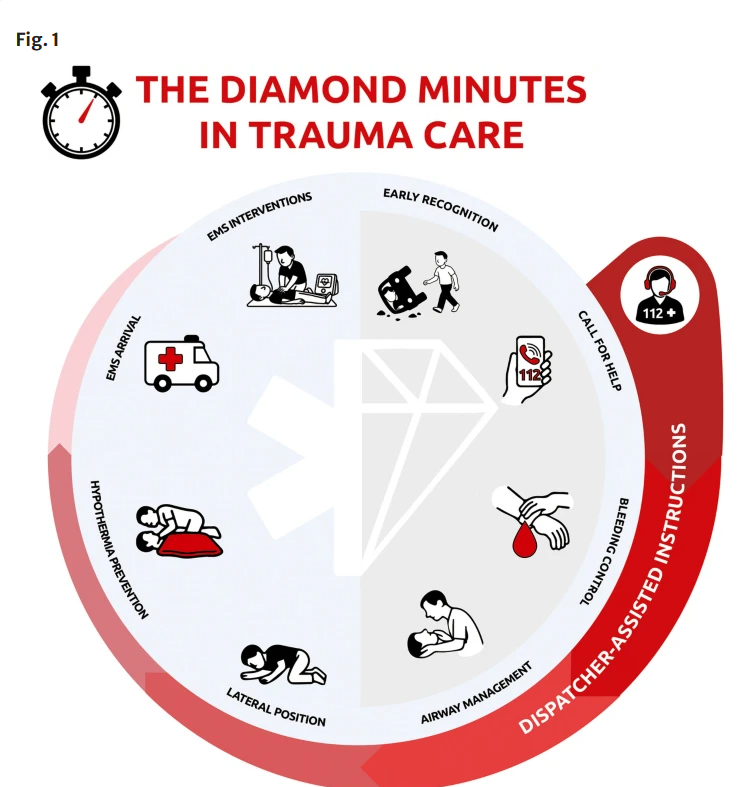
Imbriaco, G., D’Arrigo, S., Limonti, F. et al. The diamond minutes: rethinking the earliest link of the trauma chain of survival. Scand J Trauma Resusc Emerg Med 34, 79 (2026). https://doi.org/10.1186/s13049-026-01611-7
Category: Trauma
Keywords: Freeze dried plasma (PubMed Search)
Posted: 5/30/2026 by Robert Flint, MD
(Updated: 7/28/2026)
Click here to contact Robert Flint, MD
This article suggest that freeze-dried plasma (FDP) is an acceptable adjunct to whole blood for prehospital resuscitation of trauma patients. “FDP is pathogen-reduced, shelf-stable for up to two years at room temperature, lightweight, and rapidly reconstituted at the point of care.” This method offers an advantage when caring for patients in remote areas with long transport times and has been used by NATO and Canadian armed forces.
Peddle, M., Trojanowski, J. & Nolan, B. The role of freeze-dried plasma in a world of whole blood: a Canadian prehospital and transport perspective. Scand J Trauma Resusc Emerg Med 34 (Suppl 1), (2026). https://doi.org/10.1186/s13049-026-01629-x
Category: Trauma
Keywords: Head injury delayed injury (PubMed Search)
Posted: 5/28/2026 by Robert Flint, MD
(Updated: 7/28/2026)
Click here to contact Robert Flint, MD
Of the 215 Norwegian patients on oral anticoagulation seen for a head injury and having a normal initial head CT, none developed delayed hemorrhage. Median age was 83 years.
Bahr, M.A., Visnes, H. & Brommeland, T. No delayed intracranial hemorrhage in head injury patients on oral anticoagulants and with normal CT: a retrospective study of 215 patients. Scand J Trauma Resusc Emerg Med (2026). https://doi.org/10.1186/s13049-026-01617-1
Category: Trauma
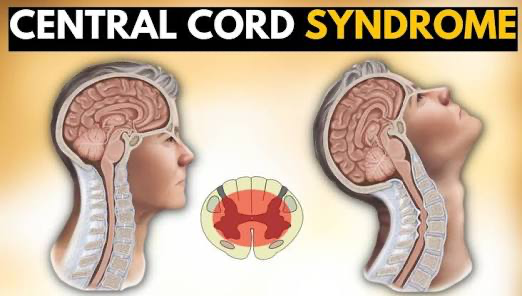
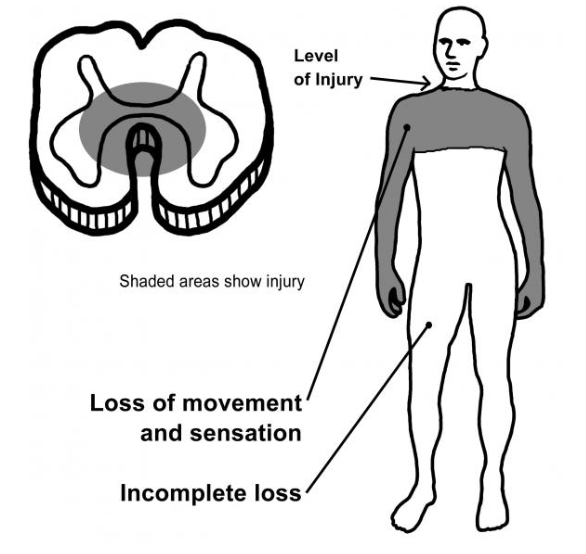
Keywords: Central cord (PubMed Search)
Posted: 5/24/2026 by Robert Flint, MD
(Updated: 7/28/2026)
Click here to contact Robert Flint, MD
Category: Trauma
Keywords: Removal, motorcycle helmet (PubMed Search)
Posted: 5/17/2026 by Robert Flint, MD
Click here to contact Robert Flint, MD
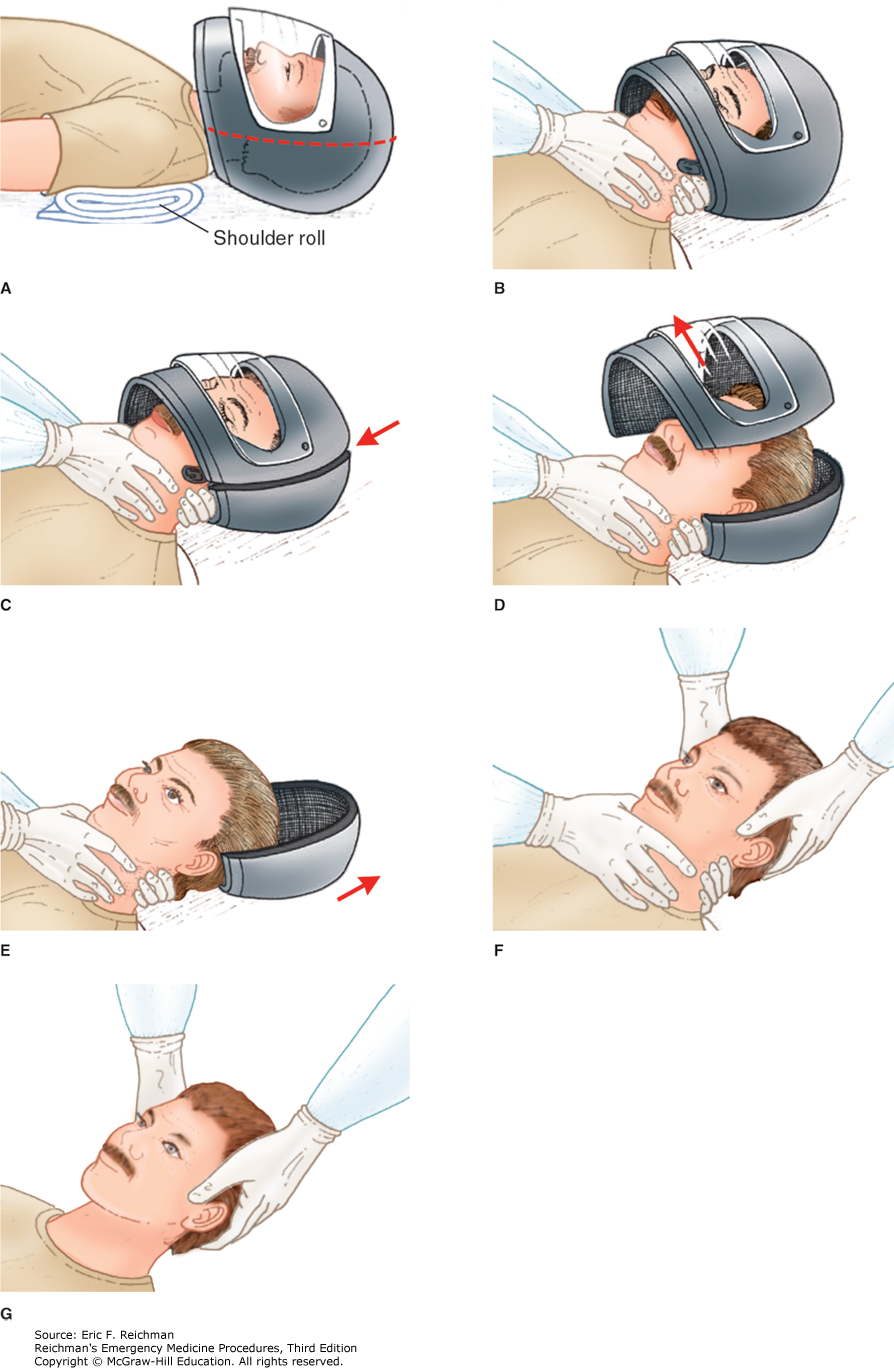
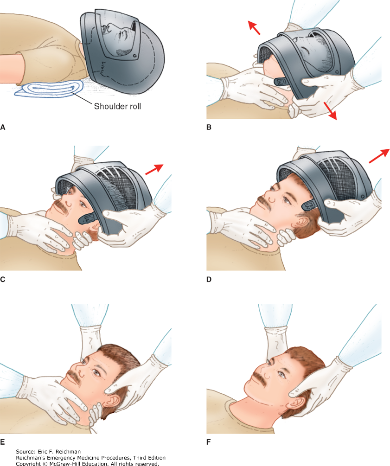
Here are two techniques to remove a helmet from an injured motorcyclist. The first uses a cast saw to bivalve the helmet. A link for a video is also provided.
Category: Trauma
Keywords: Dementia trauma independent living (PubMed Search)
Posted: 4/28/2026 by Robert Flint, MD
(Updated: 5/10/2026)
Click here to contact Robert Flint, MD
In 290 trauma patients diagnosed with dementia prior to injury, when compared to 3000 patients over age 65 without dementia and similar injury severity score, the dementia patients had a much higher rate of discharge to an institution instead of back to home living. This was particularly true of older women.

Cohen JE, Montoya MA, Thompson A, Sanchez SE, Hwabejire J, Anderson GA, Salim A, Herrera-Escobar JP. Functional Decline and Loss of Independence After Traumatic Injury in Older Adults With Dementia. J Am Geriatr Soc. 2026 Feb;74(2):438-446. doi: 10.1111/jgs.70242. Epub 2025 Dec 14. PMID: 41392016