
A 22 year old normally healthy male presents with tachycardia (HR 140), dilated pupils (7 mm), dry flushed hot skin, and confusion/agitation. His mother states he has a 1 day history of “talking out of his head not making sense”, “seeing things that aren’t there”, and “speaking to video game characters”. He has suprapubic tenderness with markedly distended bladder on exam revealing over 1 liter of urine on bladder scan. She found a small bottle containing a large amount of small 2-3 mm black seeds in his room and suspects he ingested them. What treatment options would you consider?
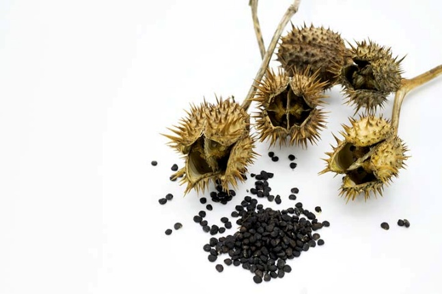
This patient is exhibiting symptoms and signs consistent with muscarinic receptor blockade (aka anticholinergic toxicity) characterized by confusion, tachycardia, mydriasis, dry flushed skin, hyperthermia, and urinary retention. The small black seeds are jimson seeds from Datura stramonium (devil’s trumpet, thorn apple) and contain atropine, hyoscyamine and scopolamine in highest concentration and are used as a recreational drug for hallucinogenic effects.
Treatment options include gastric decontamination with activated charcoal and whole bowel irrigation to limit ongoing GI absorption. These small seeds are usually ingested in abundance and lodge throughout the GI tract and have variable and prolonged absorption which can cause resurgence of symptoms. After ingestion, anticholinergic effects are seen within 30-60 minutes with effects lasting up to 24-48 hours.
Benzodiazepines are often used as first line treatment for anticholinergic-induced CNS agitation. However repeat doses are often necessary leading to undesired effects including loss of airway protection, aspiration, and respiratory depression. In one retrospective study, benzodiazepines were shown not only to be less effective than true antidotal therapy but have higher complication rate. Antidotal treatment with reversible acetylcholinesterase inhibitor drugs provide safe and effective targeted therapy reversing both central and peripheral muscarinic effects and are indicated in cases of severe anticholinergic poisoning (intractable agitation, tachycardia, and hyperthermia).
Unfortunately, intravenous physostigmine (Antilirium) which was traditionally used has not been produced in the U.S. since February 2023 leading to this drug shortage. Alternatively, restricted use imported physostigmine (Anticholium) and rivastigmine (Exelon), a long-acting well tolerated acetylcholine inhibitor used for Alzheimer disease and Parkinsonism, have been utilized with good success in several reports of diphenhydramine overdose cases.
Rivastigmine is available only in oral and transdermal forms. Although, not as fast acting as IV physostigmine, it’s tertiary amine structure enables passage across the blood brain barrier. Several reported cases and small studies show effectiveness and safety of rivastigmine for anticholinergic poisoning. The recommended oral dose of rivastigmine is 3-6 mg every hour until resolution of symptoms (max 12 mg/day) and/or transdermal Patch 9.5-13.3 mg.
Rivastigmine as an alternative treatment for anticholinergic toxidrome in light of the physostigmine shortage: A case series. Berg M, Strand A, et al. Am J Emerg Med. 2025 Aug;94:144-147. doi: 10.1016/j.ajem.2025.04.047. Epub 2025 Apr 22. PMID: 40288328.
Rivastigmine for the management of anticholinergic delirium. Chiew AL, Holford AG, et al. Clin Toxicol (Phila). 2024 Feb;62(2):82-87. doi: 10.1080/15563650.2024.2319854. Epub 2024 Mar 11. PMID: 38465631.
Transdermal rivastigmine as a therapeutic option in severe diphenhydramine-induced anticholinergic toxicity: A case report and literature review. Gilbert BW, Santiago RD, et al. Pharmacotherapy. 2025 Jul;45(7):462-467. doi: 10.1002/phar.70031. Epub 2025 Jun 10. PMID: 40492363.
A comparison of physostigmine and benzodiazepines for the treatment of anticholinergic poisoning. Burns MJ, Linden CH, Graudins A, Brown RM, Fletcher KE. Ann Emerg Med. 2000;35:374–381. doi: 10.1016/S0196-0644(00)70057-6.